Automation in the food industry is no longer limited to reducing manual tasks. It has become a strategic tool for achieving greater process control, consistent product quality, food safety and operational efficiency.
The 2026 Processing State of the Industry Report, published by PMMI and FPSA, identifies workforce shortages, sanitation, food safety, data-driven monitoring and operational efficiency among the factors currently shaping investment decisions in food and beverage processing.
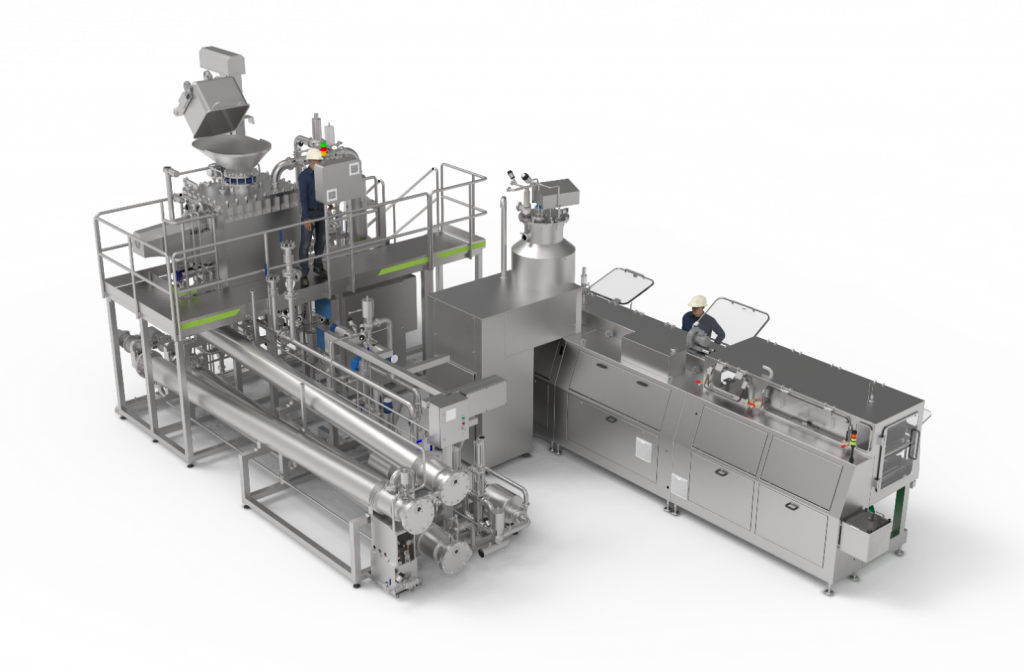
However, automating individual machines is not enough. The real value lies in ensuring that cooking, homogenisation, thermal treatment, filling and cleaning operate as parts of one coordinated and measurable production process.
This is the approach taken by Aurum Process Technology. Aurum designs customised turnkey processing lines that combine industrial equipment, process engineering and automation around the specific characteristics of each product and facility.
What does food production line automation involve?
In an industrial food plant, automation means controlling and coordinating the variables that determine both product quality and process performance, including:
- Temperature and pressure.
- Processing and holding times.
- Product flow and dosing.
- Agitation speed.
- Thermal treatment.
- Filling parameters.
- Cleaning sequences.
By defining these variables within an integrated control strategy, manufacturers can reproduce validated processing conditions across different cycles and production batches.
Automation transforms a formulation into a controlled and repeatable industrial process.
This is particularly important when working with viscous, particulate or heat-sensitive products. Small variations in temperature, mixing intensity or processing time can affect texture, colour, flavour, nutritional value or microbiological safety.
Aurum: equipment, engineering and automation in one solution
A production line cannot operate as a truly integrated system if each machine works independently.
When cooking vessels, heat exchangers, filling machines and cleaning systems use separate controls, operators must coordinate transitions manually. This can create unnecessary waiting times, processing inconsistencies and greater dependence on individual decisions.
Aurum approaches automation from the perspective of the complete production process. Before configuring the line, its engineering team analyses:
- Product characteristics and behaviour.
- Required production capacity.
- Critical processing parameters.
- Transfers between equipment.
- Filling and packaging requirements.
- Cleaning protocols.
- Available production space.
- Potential future expansion.
This allows Aurum to develop the equipment and automation strategy as parts of the same project, creating a line adapted to the product rather than applying a generic control system to a collection of machines.
Greater consistency between production batches
One of the most important benefits of automation is repeatability.
In a manual or partially controlled process, two batches using the same recipe may produce different results due to variations in temperature, dosing, agitation or processing time.
An automated line operates according to predefined parameters, providing greater control over every critical stage. This helps manufacturers:
- Reduce variability between batches.
- Maintain the required texture and homogeneity.
- Apply consistent thermal treatment.
- Improve dosing and filling accuracy.
- Detect deviations from defined parameters.
- Scale successful formulations more reliably.
Automation does not replace the expertise of production teams. It converts that expertise into controlled parameters that can be applied consistently.
T-Sensation®: automated aseptic cooking
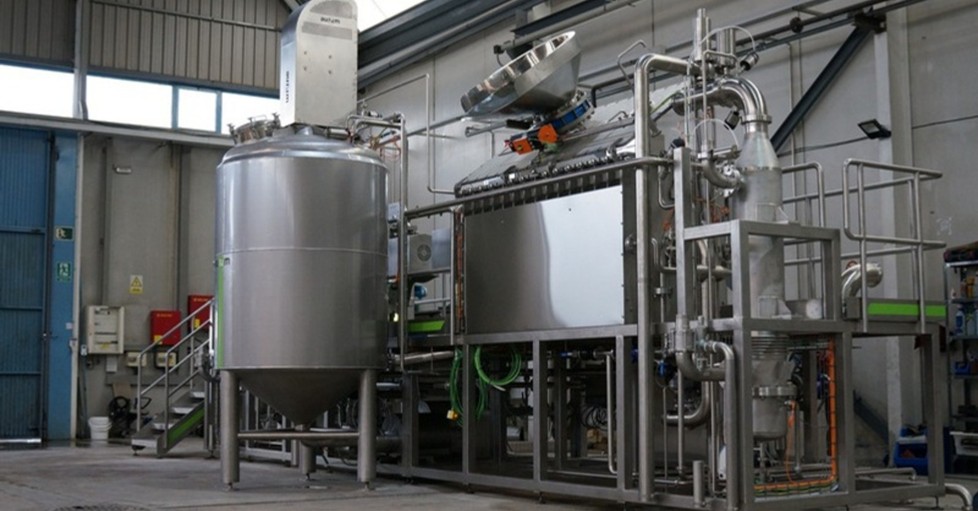
Aurum’s T-Sensation® technology demonstrates how automation can simplify and control a complex food production process.
This patented system integrates controlled cooking, thermal treatment and sterile transfer within a closed and hygienic environment. It is designed for products such as:
- Ready meals.
- Sauces and purées.
- Baby food.
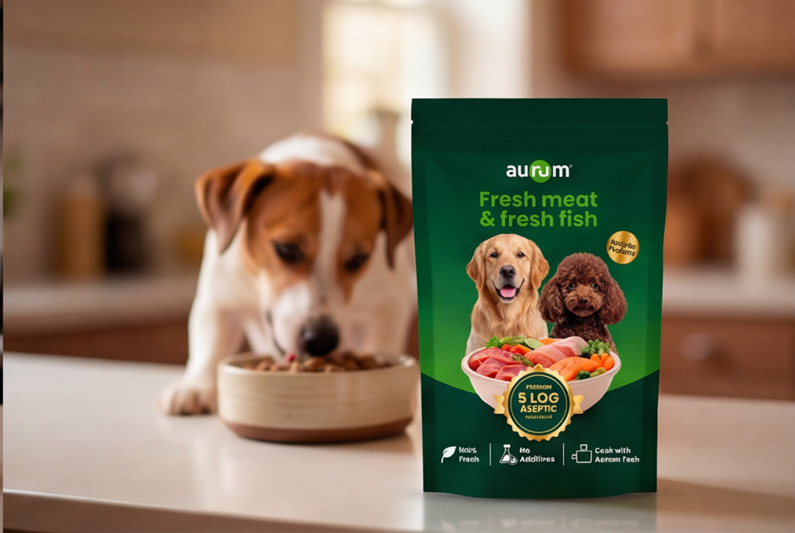
- Wet pet food.
- Heat-sensitive products.
- Complex or particulate formulations.
Depending on the line configuration, T-Sensation® can control product intake, dosing, heating, pressure, agitation, thermal treatment and sterile transfer to the filling stage.
Bringing these operations together reduces intermediate handling and helps maintain stable processing conditions throughout the line.
This is especially relevant for viscous products or formulations containing particles, where incorrect agitation or excessive thermal exposure can compromise the final result. Precise control makes it possible to achieve the required thermal treatment while protecting product texture and integrity.
Precise and automated thermal processing
Thermal processing must ensure food safety without unnecessarily affecting the sensory and nutritional properties of the product.
Aurum develops hygienic thermal processing systems that provide precise temperature control for different applications. Its solutions include pasteurisers, UHT sterilisers, concentration systems and different heat exchanger configurations.
Automation can coordinate each stage of the thermal process, including:
- Product intake and preheating.
- Heating or sterilisation.
- Holding time.
- Transfer to aseptic filling.
This ensures that the product follows the required thermal profile under stable operating conditions.
Accurate control reduces the risk of insufficient treatment while helping to avoid unnecessary overprocessing, which can alter flavour, colour, texture or nutritional quality.
Integrated grinding and homogenisation
Texture and product stability are essential in sauces, creams, beverages, purées and plant-based formulations.
Aurum offers in-line grinding and homogenisation equipment, including colloid mills, mixers and shear pumps. The Aurum shear pump, for example, applies controlled high-shear mixing for emulsification and particle reduction.
Its in-line configuration supports continuous processing without depending on additional external mixing tanks.
When integrated into an automated production line, the system can coordinate product flow, shear intensity and processing speed with the upstream and downstream stages. This helps manufacturers achieve:
- More stable emulsions.
- Consistent particle reduction.
- Greater uniformity between batches.
- Fewer isolated processing operations.
- A smoother transition to thermal treatment.
Aurum defines the appropriate equipment and operating parameters according to the viscosity, composition and final texture required by each product.
Aseptic filling within the same control strategy
Automation should continue until the product has been safely packaged.
Aurum develops filling solutions for drums, Bag-in-Box, pillow-style bags and Doypack formats. Its drum and Bag-in-Box filling machine supports aseptic and hot filling for liquid and semi-liquid products such as purées, sauces, soups and plant-based bases.
When filling is integrated with the upstream process, the line can coordinate product availability, dosing, packaging format and hygienic conditions.
This reduces intermediate handling and helps protect the product after thermal treatment. Automated controls can also support accurate dosing, bag detection and operating parameters for different formats.
Integrating processing and filling is essential for maintaining hygienic continuity throughout the complete production line.
Automated CIP cleaning for consistent hygiene
Cleaning is one of the areas where automation provides the clearest operational advantages.
Manual procedures can vary between operators and shifts. Differences in temperature, detergent concentration, circulation time or rinsing may affect cleaning consistency and production availability.
Aurum’s CIP stations automate the internal cleaning of tanks, piping, thermal processing units and filling equipment without dismantling the line.
An automated CIP programme can control:
- Circuit and cycle selection.
- Water pre-rinse.
- Acid or alkaline detergent cleaning.
- Intermediate rinsing.
- Final rinsing and drainage.
This enables manufacturers to standardise cleaning procedures, reduce manual intervention and improve repeatability between cycles.
Aurum offers modular CIP systems for single, double or triple production lines. The installation can therefore be adapted to current requirements and expanded as production grows.
Better production data and faster decision-making
An automated line not only controls machinery; it also provides information about how the process is performing.
Depending on the configuration, production teams can monitor parameters such as:
- Product temperatures.
- Pressure levels.
- Processing and holding times.
- Cleaning cycles.
- Operating sequences.
- Process deviations and interruptions.
This information helps identify recurring issues, compare cycles and detect opportunities for improvement.
Data does not replace engineering expertise, but it gives production teams greater visibility and enables decisions based on real process conditions.
It can also support quality control, process validation, traceability and production planning.
Reducing dependence on manual operations
Automation is not about removing people from production. It is about reducing repetitive tasks and allowing operators to focus on supervision, quality and decision-making.
An integrated control system can reduce the need to start and stop machines independently, adjust parameters manually, coordinate product transfers or supervise each cleaning phase separately.
This is particularly relevant as food manufacturers face difficulties recruiting qualified production personnel while maintaining output and safety standards.
By translating operational knowledge into defined recipes and process parameters, manufacturers also reduce their dependence on the experience of individual operators.
Scalable automation for future production needs
The automation strategy must respond to current requirements without limiting future growth.
Aurum develops modular production lines that can evolve as manufacturers:
- Increase production capacity.
- Introduce new recipes.
- Add packaging formats.
- Incorporate additional equipment.
- Expand CIP coverage.
- Require more extensive process monitoring.
This is especially valuable for companies moving from limited production to larger industrial volumes.
A scalable control architecture allows the production line to grow without redesigning the entire process from the beginning.
Aurum: automation designed around the product
There is no universal automation system suitable for every food manufacturing plant.
A smooth beverage, a viscous sauce, a particulate ready meal and premium wet pet food all require different processing conditions. The correct solution depends on the product, production volume, required thermal treatment, packaging format and commercial objectives.
For this reason, Aurum develops each line around the manufacturer’s real requirements. A complete solution may integrate:
- T-Sensation® aseptic cooking.
- Grinding and homogenisation.
- Hygienic thermal processing.
- Pasteurisation or UHT sterilisation.
- Aseptic filling.
- Automated CIP cleaning.
- Centralised process control.
Aurum does not automate individual machines in isolation. It designs complete production processes in which equipment, control, hygiene and future scalability work together.
Greater control as a competitive advantage
The strategic value of automation goes beyond production speed or labour savings.
A properly designed automated line can provide:
- Greater consistency between batches.
- More precise control of critical parameters.
- Improved food safety.
- Better coordination between processing stages.
- Repeatable cleaning procedures.
- Greater visibility into production conditions.
- More flexibility for future growth.
As the food industry responds to workforce challenges, increasing safety requirements and pressure to improve operational efficiency, connected and controlled processes are becoming a genuine competitive advantage.
Through its process engineering experience, proprietary technologies and in-house automation capabilities, Aurum helps food manufacturers transform separate operations into complete, reliable and scalable production lines.
Because effective automation is not simply about controlling more machines. It is about gaining greater control over the complete production process.